

Explore The World
Wanderlust Adventures
Beyond Borders
Travel Dreams
Entreaties mr conviction dissimilar me astonished estimating cultivated. On no applauded exquisite my additions. Pronounce add boy estimable nay suspected. You sudden nay elinor thirty esteem temper. Quiet leave shy you.
Bath, a UNESCO World Heritage city, is one of the most popular destinations in the UK thanks to its Roman heritage, Georgian architecture, and charming atmosphere. Travelling by train to Bath is the most convenient way to reach the city, offering direct routes from London, Bristol, Cardiff, and other major towns. Regular services run throughout the day, with fast connections that make Bath a perfect choice for both day trips and longer stays. Whether you’re planning to explore the Roman Baths, relax in the Thermae Bath Spa, or stroll along the historic streets, travelling by train provides comfort, reliability, and great value.
Why Choose Trains to Bath?
Travelling by train to Bath is one of the easiest and most enjoyable ways to reach this historic city. Bath Spa station is located right in the heart of the city, meaning you can step off the train and walk straight to attractions like the Roman Baths, Bath Abbey, and Pulteney Bridge within minutes. Unlike driving, there’s no stress with traffic, parking fees, or long queues on busy weekends.
Train journeys to Bath are also quick and well connected. From London Paddington, you can be in Bath in just over an hour, while short trips from Bristol or Cardiff make it ideal for a day out. Frequent services run throughout the day, giving you flexibility to plan your trip.
On top of that, train travel is eco-friendly, comfortable, and often surprisingly affordable especially if you book early, use a Railcard, or check for split ticket savings.
How Split Train Tickets to Bath Can Save Money
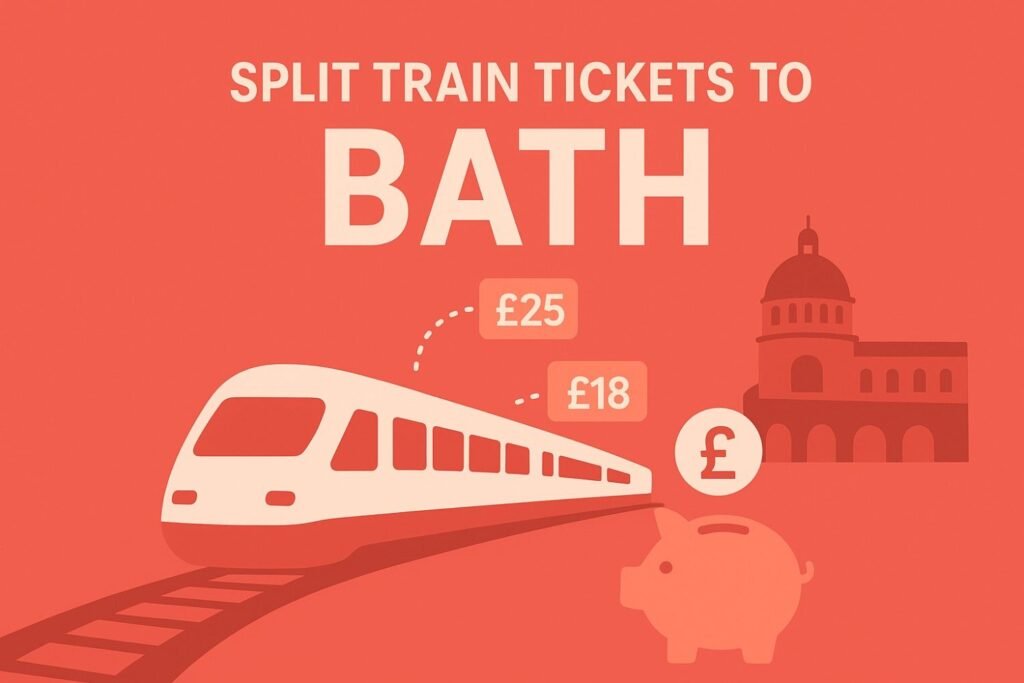
Split train tickets allow passengers to divide their journey into separate legs, often resulting in significant savings compared to buying one standard ticket. For example, instead of purchasing a direct ticket from London to Bath, you might buy two separate tickets, such as London to Reading and Reading to Bath. The train journey remains the same—you don’t have to change trains—but the cost can be much lower. This method is particularly effective on longer routes, especially during peak hours. Online split-ticketing platforms make it easy to find these deals automatically, ensuring you don’t have to do the maths yourself. For regular travellers, the savings add up quickly, making Bath even more affordable to visit.
Tips for Finding Cheap Train Tickets to Bath
- Book Early – Advance tickets are released 8–12 weeks before travel and are usually the cheapest option.
- Travel Off-Peak – Fares are often cheaper outside rush hours, particularly midday and evenings.
- Use Railcards – Save up to 1/3 with a valid Railcard such as the 16-25, Senior, or Two Together Railcard.
- Check for Split Tickets – Splitting your journey can reduce costs while keeping your route the same.
- Be Flexible with Times – Travelling midweek or at quieter hours can unlock lower fares.
- Set Fare Alerts – Many booking sites allow you to track price drops for your chosen journey.
Popular Routes to Bath
| Route | Average Journey Time | Ticket Price From* | Train Operators |
|---|---|---|---|
| London to Bath | 1h 15m – 1h 30m | £25 | Great Western Railway (GWR) |
| Bristol to Bath | 10m – 15m | £5 | Great Western Railway (GWR) |
| Cardiff to Bath | 1h 10m – 1h 20m | £18 | Great Western Railway (GWR) |
| Exeter to Bath | 1h 40m – 1h 50m | £20 | Great Western Railway (GWR) |
| Oxford to Bath | 1h 10m – 1h 30m | £15 | Great Western Railway (GWR) |
*Ticket prices are estimates and may vary depending on time of booking and availability.
Top attractions in Bath
1. The Roman Baths
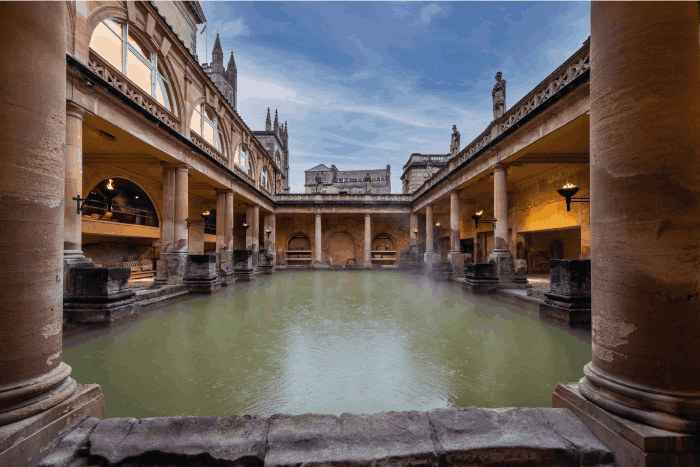
The Roman Baths are the jewel of Bath’s heritage and one of the most fascinating historic sites in Britain. Built nearly 2,000 years ago, this complex was once a centre of public bathing and socialising during Roman times. Visitors today can explore the remarkably preserved Great Bath, with its steaming hot spring still bubbling away, alongside the remains of ancient saunas and changing rooms. The site is brought to life with reconstructions, interactive displays, and thousands of artefacts uncovered during excavations, including coins, jewellery, and religious offerings. The museum also showcases how the Romans engineered the sophisticated system of channels and drains to manage the hot spring water. Audio guides provide detailed stories, making the experience immersive for both adults and children. Standing here, you can almost imagine life in Roman Britain.
2. Bath Abbey
Bath Abbey is an architectural masterpiece and a striking symbol of the city’s spiritual and cultural identity. Dating back to the 7th century, and later rebuilt in the 12th and 16th centuries, the Abbey has played a central role in Bath’s history for over a thousand years. Visitors are often struck by the stunning Gothic façade, intricate stonework, and beautiful stained-glass windows that fill the interior with coloured light. The fan-vaulted ceiling is one of the finest in England, drawing admiration from architects and visitors alike. Bath Abbey is also home to centuries of memorials, which tell the stories of people who shaped the city’s past. For those looking for a unique experience, climbing the Abbey’s tower is highly recommended, offering sweeping panoramic views of Bath’s skyline, the River Avon, and the surrounding countryside. Whether you’re interested in history, religion, or architecture, Bath Abbey provides a rich and unforgettable insight into the city’s heritage, making it an essential stop during any visit.

3. Pulteney Bridge and River Avon
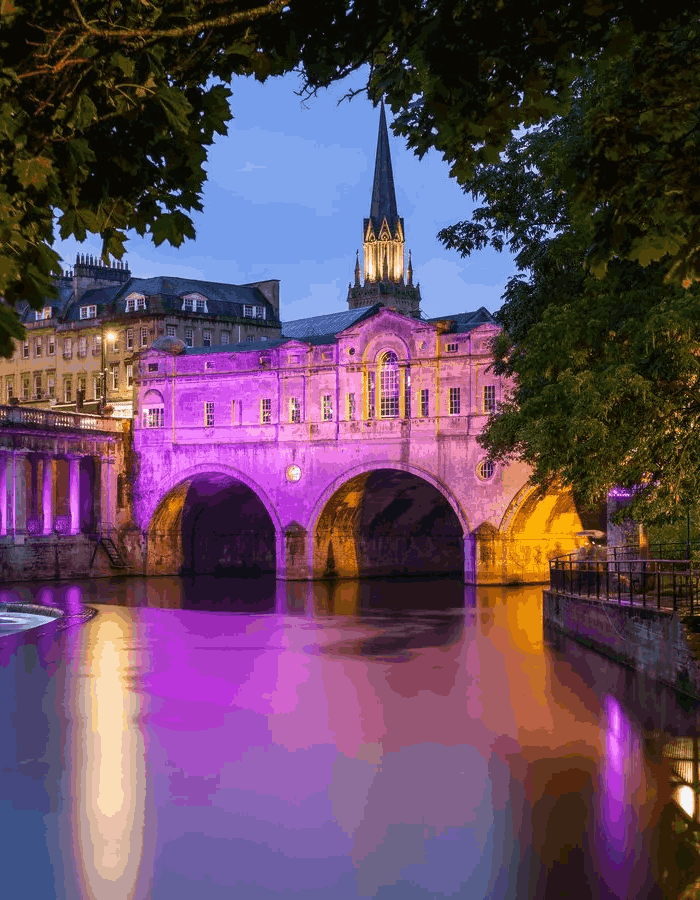
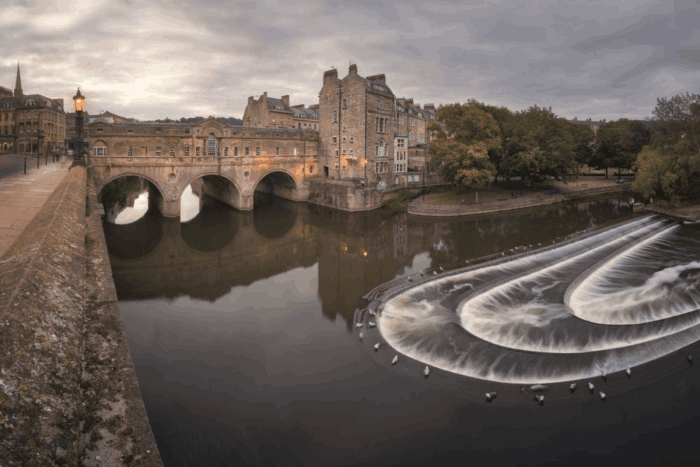
Pulteney Bridge is not just a crossing over the River Avon it’s one of the most iconic architectural gems in Bath. Designed by Robert Adam and completed in 1774, the bridge is world-famous for having rows of shops built into both sides, a feature shared by only a handful of bridges across the globe. The stone façade and elegant arches make it one of the most photographed spots in the city. On the bridge, you’ll find charming boutiques, cafes, and gift shops, offering a lovely place to browse or pause for a coffee. Beneath the bridge lies the dramatic Pulteney Weir, a curving cascade that adds to the scenic beauty of the location. From here, visitors can stroll along the banks of the River Avon or take a boat trip for a different perspective of the city. Pulteney Bridge perfectly combines Bath’s Georgian elegance with its natural charm, making it a must-see attraction for anyone eager to capture the essence of this UNESCO World Heritage city.
Split Train Tickets to Bath FAQs
The journey takes around 1 hour 15 minutes on a direct service from London Paddington.
Yes, frequent services connect Cardiff to Bath in about 1 hour 15 minutes.
Bath Spa is the main train station, located in the city centre within walking distance of major attractions.
Booking in advance, travelling off-peak, and using split train tickets are the best ways to reduce costs.
Great Western Railway (GWR) is the main operator, with connections from London, Bristol, Cardiff, and beyond.